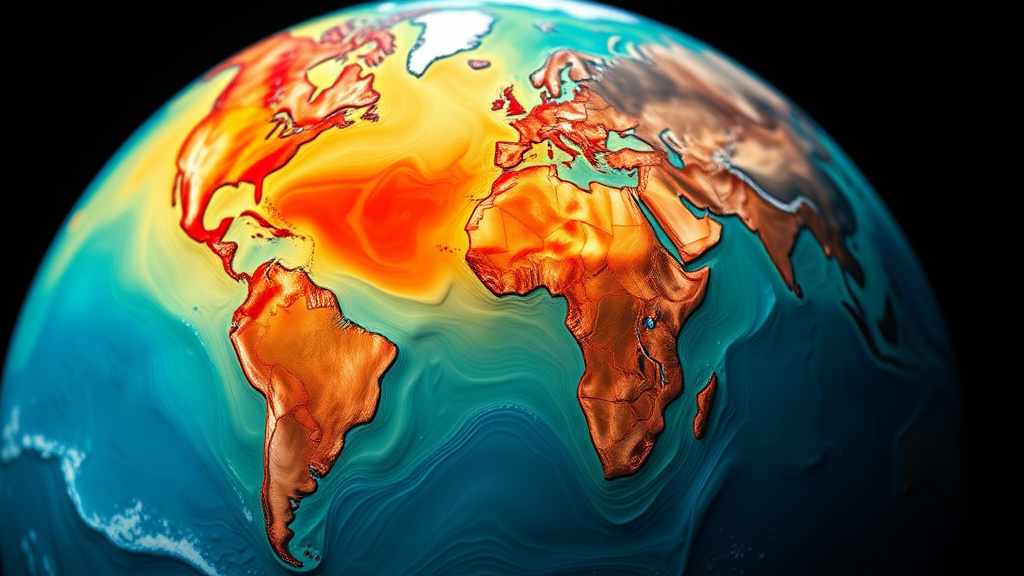

Earth’s climate system works as a enormous circulation network hidden beneath the waves. Recent groundbreaking research from leading climate scientists has exposed the key systems by which sea currents serve as the planet’s thermostat, transporting heat from the equator to the poles and deeply affecting climate patterns across the globe. This article investigates how these strong oceanic currents influence our climate system, why their disturbance presents major threats, and what experts are uncovering about their role in controlling worldwide temperatures for future centuries.
The Essential Importance of Marine Currents in Climate Control
Ocean currents act as Earth’s main heat distribution system, transporting warm water from tropical zones toward the poles while at the same time moving cold water back toward the equator. This continuous circulation pattern, referred to as thermohaline circulation, is fundamental to maintaining the planet’s temperature equilibrium. Without these powerful underwater rivers, equatorial regions would undergo extreme heat accumulation, while polar areas would remain perpetually frozen. Scientists have determined that even minor disruptions to these currents can cause significant shifts in regional and global climate patterns, impacting precipitation, temperature extremes, and seasonal weather variations across multiple continents.
The mechanisms regulating ocean currents are highly sophisticated, involving interplay of water temperature, salinity, wind patterns, and Earth’s rotation. Recent advanced modeling alongside satellite observations have allowed scientists to chart these flows with unparalleled detail, revealing their intricate role in climatic balance. The Atlantic Meridional Overturning Circulation and the Pacific Thermohaline Circulation demonstrate how these systems transport heat energy equivalent to millions of power plants. Comprehending these mechanisms is crucial for projecting future climate scenarios and comprehending how human activities might modify these vital natural systems that have sustained climatic balance for millennia.
Major Ocean Current Systems and How They Work
Ocean currents serve as Earth’s main heat transport system, transporting warm water from tropical regions toward the poles while sending cold water back to equatorial regions. These integrated systems function without interruption, caused by variations in temperature, salt content, and wind conditions. The three major current systems—the Atlantic Meridional Overturning Circulation, the Pacific Thermohaline Circulation, and the Indian Ocean circulation—work together to regulate global temperatures and maintain climate stability. Comprehending the mechanics of these systems is crucial for forecasting coming climate shifts and their consequences for people around the world.
The Atlantic Meridional Overturning Circulation System
The Atlantic Meridional Overturning Circulation (AMOC) constitutes one of Earth’s most important climate controllers, transporting large amounts of warm water toward the north from the tropics. This system consists of the Gulf Stream and North Atlantic Current, which deliver tropical heat to more northern regions, making regions like Western Europe considerably warmer than their geographic locations would suggest. The warm water eventually cools before sinking in the North Atlantic, initiating a deep return current that completes the circulation cycle. Scientists regard AMOC essential for preserving the Northern Hemisphere’s climate patterns and local weather patterns.
Latest findings have raised concerns about AMOC’s stability, as climate change triggers freshwater inputs from thawing glaciers and increased precipitation. These freshwater additions reduce water density, possibly undermining the downwelling process that powers the circulation. A reduction of AMOC could result in major consequences, including decreased heat delivery to Europe, changed rainfall distributions, and notable alterations in Atlantic hurricane activity. Climate scientists continuously monitor AMOC strength through satellite observations and buoy array systems to identify any indicators of disruption.
The Pacific Ocean’s Heat-Driven Ocean Circulation
The Pacific Ocean’s thermal circulation system operates as a large heat engine, driven primarily by temperature and salinity differences instead of wind patterns alone. Dense, cold water descends in the North Pacific and the Southern Ocean, initiating a slow but persistent abyssal conveyor that transports water through the basin throughout centuries. This circulation transports nutrient-rich deep water to the surface in specific regions, maintaining productive marine ecosystems and fisheries. The Pacific’s thermohaline system substantially affects regional climate conditions, distribution of precipitation, and seasonal climate variations across Asia, North America, and Oceania.
The Pacific thermal circulation system interacts dynamically with weather patterns and other ocean systems, creating intricate feedback loops that influence worldwide climate balance. Changes to this circulation contribute to phenomena like El Niño and La Niña occurrences, which have worldwide climatic consequences. Scientists employ advanced computer models and observational data to determine how changing ocean temperatures and freshwater additions might modify Pacific circulation patterns. These investigations help predict likely changes in regional climates and their effects on farming, freshwater supplies, and communities along the coast throughout the Pacific basin.
Environmental Effects and Long-term Consequences
Ocean currents function as Earth’s principal heat transport mechanism, carrying warm tropical waters to the poles while delivering cold water to the equator. This continuous circulation regulates global temperature patterns and maintains climatic equilibrium across various areas. However, climate change poses a risk to these fragile processes. Increasing levels of greenhouse gases warm surface waters, risking slowdown of thermohaline circulation and diminishing the Atlantic Meridional Overturning Circulation. Such disruptions could lead to dramatic shifts in regional climate, including dramatic temperature changes in Europe and changed rainfall patterns impacting billions of people globally.
Researchers forecast mounting serious impacts if ocean circulation patterns keep declining. Reduced circulation would reduce heat movement to northern latitudes, paradoxically causing cooling in some areas while intensifying heat elsewhere. These shifts could severely damage ocean habitats, collapse fisheries, and trigger financial instability across seaside populations. Understanding ocean circulation dynamics remains essential for precise climate predictions and developing effective mitigation strategies. Ongoing investigation and global collaboration are crucial to preventing permanent harm to these fundamental climate regulators and safeguarding coming generations from extraordinary climate threats.
